
EcoWest News, June 9, 2026
Welcome to EcoWest News, a weekly round-up of news and resources that you can put to use in addressing environmental issues and protecting the wild in your community.
Biodiversity
A new whale detection system and app being used in San Francisco Bay offers insight into what BC could do to prevent ships from hitting whales. [CBC]
A wildlife corridor to protect bighorn sheep near Radium was being used even before construction was complete. [BC Gov News]
In early medieval Ireland, a set of laws set out the rights and responsibilities associated with beekeeping, demonstrating that “if the will is there and communities are involved and feel invested, protecting our bees is possible.” [The Conversation]
Rangelands are a key foraging and nesting ground for bumblebees, but their numbers are severely reduced by drought and they struggle to recover. [Entomology Today]
Tackling Pollution
Air pollution, fertilizers, and fungicides are changing how nature smells and altering the chemical signals that plants and animals use to communicate. Scientists warn that insect reproduction, foraging, navigation, and even the pollination of crops could be affected. [Yale Environment 360]
Human-created noise is stopping animals from hearing an approaching predator or attracting a mate. This is a problem we can solve. [MIT Technology Review]
The air pollution from tiny particles of a rubber additive cast off by car tires, combined with other chemicals derived from tire wear, may pose a greater risk to human and animal health than when they’re considered individually. [Yale Environment 360]
A series of stepped filtration pools, supplemented with biochar, spawning gravel, and native plants, will help filter contaminants from highway runoff at Cedar Vale Park in the Millstream Creek Watershed on Vancouver Island. [Peninsula Streams & Shorelines newsletter, PDF]
Energy
Saskatchewan’s decision to extend the use of coal to 2050 has tangible and costly healthcare impacts, including 70,000 person-days of difficulty breathing, 2,000 asthma episodes, and 50 premature deaths or hospitalizations. [Pembina Institute]
K̓áwáziɫ Marilyn Slett, chief councillor of the Heiltsuk Tribal Council, strongly opposes lifting the tanker ban that is key to protecting the coast and its multi-million-dollar fishing and tourism industries. [The Tyee]
Changes to the Alberta Energy Regulator’s Rules of Practice limit the right of those trying to speak for the environment and public lands to participate in the AER’s decision-making processes. [ABLawg.ca]
In Praise of Scientists
If it weren’t for a weather forecast, D-Day—the largest seaborne invasion in history—would have taken place on June 5 and been a disaster. The story of that history-bending prediction is the subject of Pressure, a new movie starring Andrew Scott as WWII meteorologist James Stagg. [Scientific American]
Making a Difference
Nurses at Royal Jubilee Hospital in Victoria have reduced waste, encouraged recycling, and improved medication disposal in the Renal Unit. [Island Health]
15 people signed up for a 5-week Green Building Foundations & Manufacturing program organized in conjunction with a Port Alberni-based startup that plans to build at least 2,000 new energy-efficient affordable homes. 12 students were hired immediately upon graduation. [The Energy Mix]
A Calgary-based coalition is pushing for regulatory changes to make small, plug-in balcony solar systems easier to adopt in Canada. [The Energy Mix]
DIY
Fill your bingo card with fascinating science stories, discoveries, and ideas all summer long by joining the Scientific American Summer Reading Challenge. [Scientific American]
Nature’s Wonders
Iron-rich liver cells located near nerve endings may help pigeons navigate using magnetic GPS. [AP News]
From a ruby-throated hummingbird in Quebec to Maasai giraffe in Tanzania, iNaturalist’s International Day of Biodiversity project collected some amazing results. [iNaturalist]
A family of beavers is preventing flooding in a London, UK, underground station. [Good]
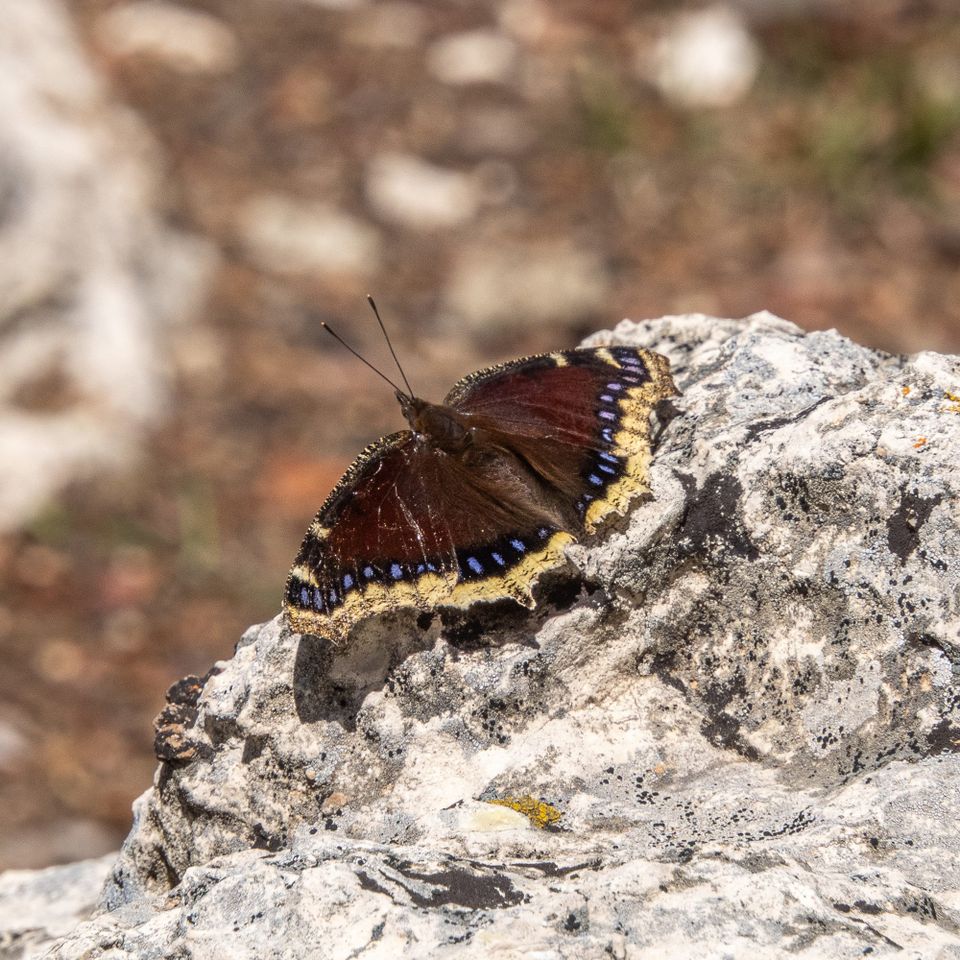
Photo credit: https://www.flickr.com/photos/apmckinlay/55318545543
EcoFriendly West informs and encourages initiatives that support Western Canada’s natural environment through its online publication and the Nature Companion website/app. Like us on Facebook, follow us on BlueSky, X, and Mastodon, or subscribe by email.
Member discussion