
Community Leaders & Books: May 2026

We profile local community leaders and post book reviews on a weekly basis on social media, along with excerpts from Nature Companion, our nature app/website. Once a month we repost these items on our website for those of you who may not be active on social media.
Community Leaders
Alberta: Lesser Slave Lake Bird Observatory held its 29th Songbird Festival on May 23 & 24. A free pancake breakfast was followed by guided bird walks, nature workshops, and tours of the Observatory. [LSLBO]
Manitoba: Out on a Limb by Manitoba author Erna Buffie explores “the secret lives and extraordinary infrastructure benefits of trees in cities, the critical role urban forests can play in increasing climate resiliency, and how grassroots organizations can empower city leaders to invest in the urban trees and forests we love – and need.” A book launch was held on May 20 at McNally Robinson in Winnipeg. [McNally Robinson]
British Columbia: Orca experts from Raincoast Conservation Foundation and National Resources Defence Council explored the key threats to southern resident killer whales on May 27 in Vancouver. [Raincoast Conservation Foundation]
Saskatchewan: Gardening at USask is offering free gardening webinars from May to November 2026. Topics include urban tree care, lawn alternatives, attracting beneficial wildlife, and regenerative gardening. [USask]
Books
Nightfaring: In Search of the Disappearing Darkness by Megan Eaves-Egenes: “In the end, my journey through the night was one of connection. To myself and others. To our stories, our histories, our collective birth from the depths of a shadowy womb. Are we even alive if we cannot stop and experience it fully? The darkness holds it all. The potential, the discoveries, the legends, and the purpose of life rests in the shadow beyond what we can see.”
Fox & I: An Uncommon Friendship by Catherine Raven: “Anthropomorphism describes the unacceptable act of humanizing animals, imagining that they have qualities only people should have, and admitting foxes into your social circle. Anyone could get away with humanizing animals they owned – horses, hawks, or even leashed skunks. But for someone like me, teaching natural history, anthropomorphizing wild animals was corny and very uncool. You don’t need much imagination to see that society has bulldozed a gorge between humans and wild, unboxed animals, and it’s far too wide and deep for anyone who isn’t foolhardy to risk the crossing.”
Grass Isn’t Greener: The Everyday Conservationist’s Guide to Bringing Nature to Your Yard by Danae Wolfe: “Conservation starts at home. It begins in backyards and on balconies. It thrives in community gardens and in local parks and nature preserves … By creating climate-and wildlife-friendly home landscapes, you can bolster biodiversity while reducing the impacts of climate change in your own community.”
Insectopolis, graphic non-fiction by award-winning cartoonist, Peter Kuper: Join hosts of ants, bugs, and butterflies as they tour a library exhibit on insects and their connections with people. You’ll discover hawk-sized dragonflies, the impact of mosquitoes in warfare, the cameo role of cicadas in the first novel ever written, and the remarkable tales of dung beetles navigating by the stars.
I Told You So: Scientists Who Were Ridiculed, Exiled, and Imprisoned for Being Right by Matt Kaplan: “In the pages ahead I am going to show how science, rather than being immune to the passions and politics of the outside world as it is meant to be, is shaped by these influences and increasingly being threatened by them … Science is going to be critical for tackling the big challenges that our society faces … We need it operating at its best to tackle these problems and, while science might look like a well-oiled machine spitting out findings to those glancing at it from the outside, it looks more like a chunky old engine prone to breakdown to those of us on the inside.”
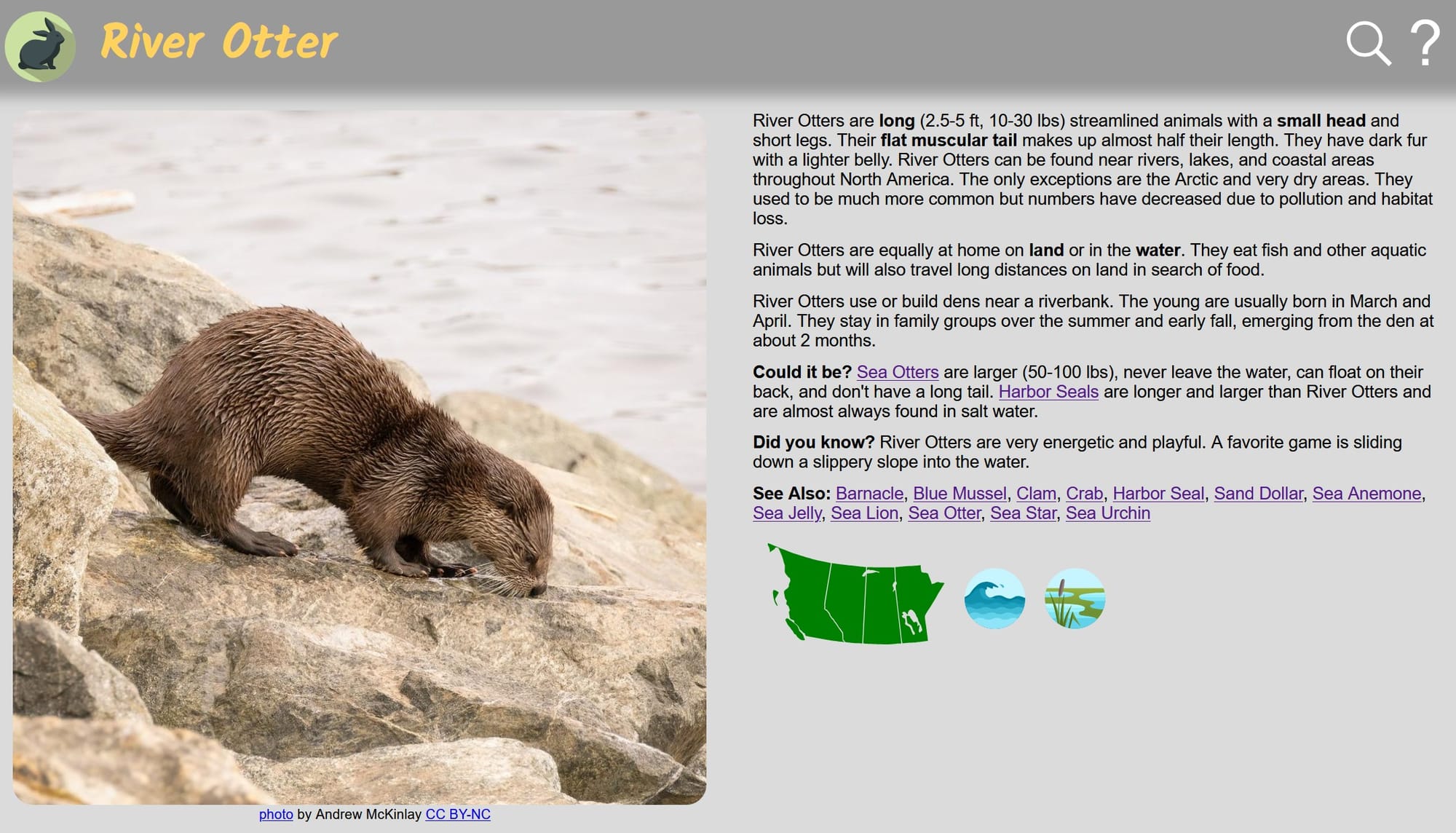
Nature Companion
River Otters are equally at home on land or in the water. A favorite game is sliding down a slippery slope into the water. (Nature Companion is a free app/website introducing many of the plants and animals found in Canada’s four western provinces.
Photo credit: https://www.flickr.com/photos/apmckinlay/49144849146
EcoFriendly West informs and encourages initiatives that support Western Canada’s natural environment through its online publication and the Nature Companion website/app. Like us on Facebook, follow us on BlueSky, X, and Mastodon, or subscribe by email.
Member discussion