
EcoWest News, June 16, 2026
Welcome to EcoWest News, a weekly round-up of news and resources that you can put to use in addressing environmental issues and protecting the wild in your community.
Biodiversity
If you want to follow in the footsteps of the great explorers, head to the ocean floor. “The deep ocean is the largest ecosystem on Earth. It is also in many ways the most extreme, home to crushing pressures, extremes of heat and cold, and a near total absence of sunlight. Animals inhabiting this midnight world tend to be equally extreme.” [The Guardian]
Sparrows are some of the trickiest birds to identify. Test your knowledge with this advanced quiz. [Vancouver Avian Research Centre, Google Doc]
Conservation & Protection
The Nature Conservancy of Canada has extended the area of land it protects around Buffalo Pound Lake. The grasslands help filter drinking water for approximately one-quarter of Saskatchewan’s population, including the cities of Regina, Moose Jaw, and several surrounding communities. [Moose Jaw Today]
Foundation species, such as trees, grasses, and oysters, provide the physical architecture of an ecosystem and alter the growth, survival, or makeup of living organisms of the same or similar species even after their death. For example, prescribed burns in grasslands stimulate new growth, while allowing skeletal trees to remain standing following a wildfire translates into higher seed density in the surrounding soil. [Inside Climate News]
Millions of amphibians and reptiles in BC are displaced and relocated from their habitats during construction of pipelines, railways, bridges, and water systems, but we have no idea if they survive the move. “Alberta and Ontario place more restrictions on the relocation of at-risk amphibians and reptiles, while translocation is rarely used or documented in the Maritimes.” [CBC]
Canada’s endangered species watchdog is so strapped for cash that it had to cancel its biannual meeting. Over 1,000 species are waiting to be assessed, a requirement if they’re to obtain legal protection and a recovery plan. [The Tyee]
Energy
Almost all new cars purchased in Norway are electric, while Denmark isn’t far behind at 70%. Sweden is at 61% and China at 53%. 15% of new cars in Canada were electric in 2024. [By the Numbers, Canada Energy Regulator]
Oil field injection wells are designed to seal wastewater permanently underground, but wells in Texas have been springing leaks, spewing forth large quantities of toxic wastewater. [Inside Climate News]
A new paper suggests that 15% of global warming comes from overlooked sources, such as carbon monoxide, non-methane volatile organic compounds, and soot. [Inside Climate News]
Recreation
Communities around the world are choosing dark-sky compliant lighting for their sports fields to protect the stars and local wildlife and to reduce glare into nearby homes. [Dark Sky]
Wood chips distributed along trail borders at the forest edge reduced the number of ticks on two Ottawa Greenbelt trails by nearly a half. [The Conversation]
Community Initiatives
The Tsolum River Restoration Society is holding workshops to help Comox Valley, BC, residents set up tadpole traps to remove invasive American bullfrogs, which could pose a threat to native species. [CBC]
Transition Salt Spring has held 10 repair cafés over the past 3 years. They’re now hosting skill share workshops teaching practical skills such as zipper rescue, clothes mending, and tool sharpening. [EventBrite]
Nature’s Wonders
Bumblebees have tiny brains, but they can solve problems just like chimps and elephants. “The cognitive flexibility … may pay off in the wild when environmental conditions change suddenly and the insects must collect pollen and nectar no matter what.” [NPR]
“Ground squirrel droppings, preserved for millennia in the Yukon’s deep permafrost, have yielded an enormous amount of environmental DNA from dozens of species of plants, insects, microbes and large mammals, offering detailed genetic information about an environment that no longer exists.” [McMaster News]
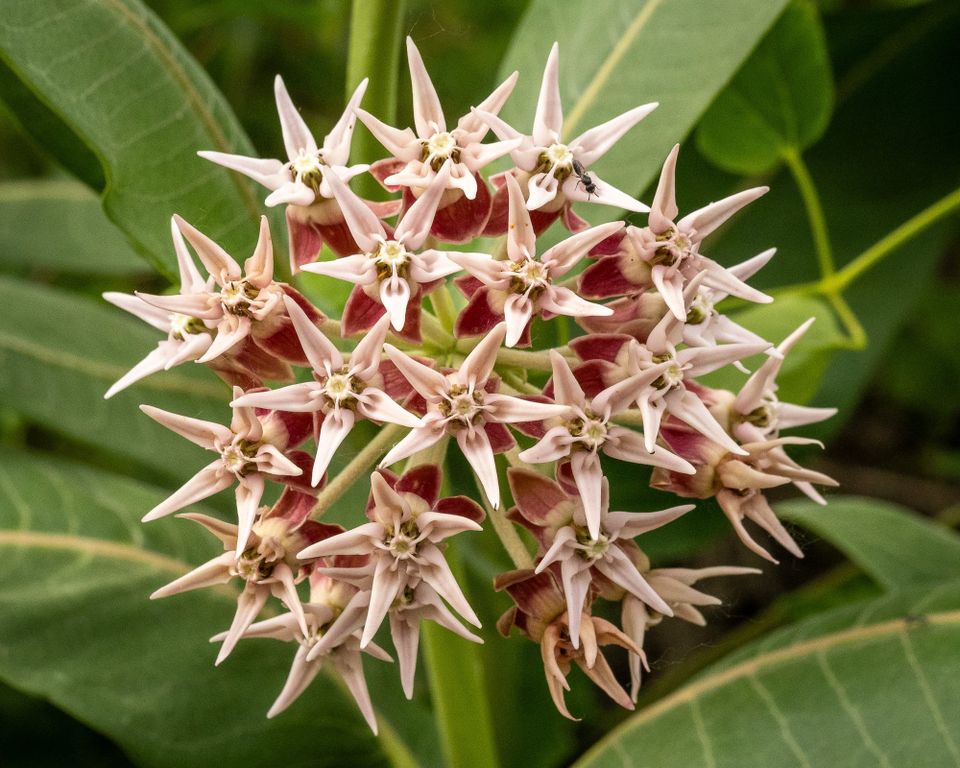
Photo credit: Showy Milkweed https://www.flickr.com/photos/apmckinlay/55335441759
EcoFriendly West informs and encourages initiatives that support Western Canada’s natural environment through its online publication and the Nature Companion website/app. Like us on Facebook, follow us on BlueSky, X, and Mastodon, or subscribe by email.
Member discussion