
EcoWest News, June 23, 2026
Welcome to EcoWest News, a weekly round-up of news and resources that you can put to use in addressing environmental issues and protecting the wild in your community.
Biodiversity
You can now search a database of all David Attenborough’s documentaries – nearly 5,000 episodes across 90 series. [Attenborough 100]
Mining
Imperial Metals has received permission to investigate reopening a gold mine in Clayoquot Sound, home to some of Vancouver Island’s largest intact old-growth forests. Exploration could include trenches as long as 2 football fields, drill pads the size of a small house, and thousands of litres of water. [The Narwhal]
Farming
The Carney government has passed a bill giving Cabinet power to greenlight use of banned pesticides (even those Health Canada has deemed unsafe) for economic or food security reasons. [CBC]
An Indigenous Grasslands Stewardship and Knowledge Exchange will support “First Nations land stewards, harvesters, Elders, youth, and students, while advancing Indigenous Science and Traditional Ecological Knowledge in grassland conservation.” [USask]
Wild bee species, many of which feed pollen to their larvae, require a diversity of pollen sources to flourish. Pollinator-friendly planting schemes should consider not just the number of flowers planted but the diversity of pollen sources and their nutritional quality. [The Guardian]
Pollution
The combined effect of light, noise, air, and other environmental pollution is greater than the sum of its parts. [Artificial Light at Night: State of the Science 2026, Dark Sky]
Wildfire Prevention & Recovery
Prairie dog colonies, with only minimal vegetation around their burrows, slow or prevent the spread of wildfires. [Sierra Club]
Emerging after a forest fire, pyrophilous fungi consume the ash, carbon, and other toxic byproducts of a forest fire. Their spores and fruiting bodies become fuel for the secondary responders, insects, mites, and bacteria, thereby restarting the food web. [CBC]
Seas & Oceans
Until recently, ship traffic in the Arctic was limited, seasonal, and closely tied to the needs of the northern communities. Canada needs to anticipate future growth in vessel traffic and ensure that development occurs safely, responsibly, and in ways that respect and benefit northern communities. [Oceans North]
70% of the coastal population of transient killer whales regularly use the Salish Sea, an inland sea spanning the waters between Campbell River, BC, and Olympia, WA. "It's probably the most critical piece of habitat for killer whales on the entire coast." [CBC]
Energy
“Canada's identity as an energy superpower needs a policy update. Energy leadership is no longer measured by export volume — it is measured by the ability to deliver clean, reliable, and cost-competitive electricity, and to use that advantage to attract investment, strengthen industrial competitiveness, and insulate the domestic economy from external shocks.” [Pembina]
Speaking Out
Brent Suter, Los Angeles Angels relief pitcher, is speaking out against fossil fuel advertising in sports: “As an athlete, I care a lot about promoting companies that share my values, and I also care a lot about our planet … I want to represent companies that want to be part of the solution.” [Climate Colored Goggles]
Young people and environmental organizations are asking the courts to order the federal government to create a climate plan that’s capable of achieving its 2030 target, meeting its legal obligations, and protecting Canadians from the impacts of climate change. [Ecojustice]
Making a Difference
Nature is now a full board member with both voice and vote at Northern Playground, a Norwegian clothing and equipment company with sustainability and social responsibility at the core of its business model. [Earth Law Center]
DIY
The Canadian Wildlife Federation is inviting communities to become bat-friendly by taking action in the areas of water, terrestrial habitat, foraging habitat, lighting, pesticide use, invasive species (cats and plants), and backyard structures. The BC Community Bat Program has a useful manual to help your community become bat-friendly. [CWF, BC Bats, PDF]
Nature’s Wonders
Bats are amazing! They can consume 100 to 500 insects in an hour, gaining 20% of their body weight in that time span, and travel up to 40 kilometres in a single night to gather food. [The Tyee]
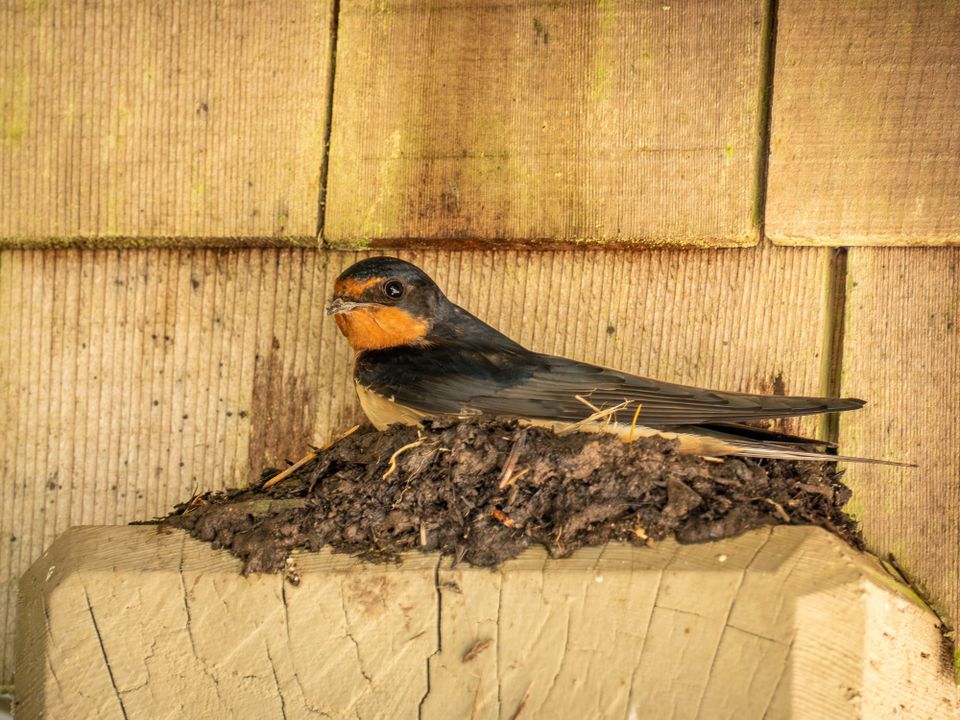
Photo credit: Barn Swallow https://www.flickr.com/photos/apmckinlay/55301601143/
EcoFriendly West informs and encourages initiatives that support Western Canada’s natural environment through its online publication and the Nature Companion website/app. Like us on Facebook, follow us on BlueSky, X, and Mastodon, or subscribe by email.
Member discussion