
EcoWest News, June 30, 2026
Welcome to EcoWest News, a weekly round-up of news and resources that you can put to use in addressing environmental issues and protecting the wild in your community.
Biodiversity
Using AI to synchronize drone footage, underwater acoustic recordings, and time-stamped behavioural observations to the nearest second, Raincoast Conservation Foundation aims to uncover how killer whales use sound to coordinate movements, share prey, and maintain social bonds. The Foundation’s goal is to understand and mitigate how noise pollution interferes with these processes. [Raincoast Conservation Foundation]
Migration
The federal government is planning more Arctic roads; however, monitoring by Indigenous guardians in the Northwest Territories demonstrates that Arctic caribou, which undertake the longest terrestrial migration on the planet, will walk parallel to roads rather than cross them. If they get trapped, they will wait for 24 hours of zero disturbance before crossing. [Mongabay]
Deer and caribou benefit from migrating as they then have superior foraging opportunities, which translates into higher fat, enabling females to carry more fawns to term, leading to population growth. [The Revelator]
Mining & Industry
This article provides a useful run-through of policies and decisions around coal mining in Alberta as well as a list of the mines that are currently active or under development. [The Narwhal]
345,000 kilometres of seismic lines generated by oil and gas activity scar Alberta’s boreal peatlands, emitting up to three times more methane than the undisturbed land around them. [The Energy Mix]
Estimates based on satellite data indicate LNG Canada may have flared more gas last year than any LNG facility worldwide. They’re now asking for a permit to continually flare up to 300 tonnes of gas per day compared to their current limit of 28 tonnes per day. [The Tyee]
Uncertainty
Canola farmers on the Prairies are changing their farming practices as they adapt to an increase in extreme weather events. Most producers didn’t feel irrigation was a viable option due to weather variability. [USask]
“Policy makers and scientists need to pay closer attention to uncertainty — and build for unpredictable outcomes … climate modelling has an important role to play in adaptation, but relying too heavily on a particular set of predictions, however sophisticated the models may be, can inadvertently fall prey to the human tendency to seek certainty.” [The Narwhal]
Homes & Neighbourhoods
The federal government has relaunched the green home retrofit program in British Columbia, Nova Scotia, Prince Edward Island, and Quebec. It has already been rolled out in Manitoba and discussions are underway with other jurisdictions. The new program will focus on low-to-median-income households and be open to homeowners and renters. [CBC]
A network of 277 solar-powered air monitors will provide Chicago residents with real-time pollution information and help officials develop guidance for permitting, urban planning, and air quality control. [Grist]
Economics & the Environment
The Common Good Economy by Mariana Mazzucato proposes an economy that aligns with five principles: “purpose and directionality; co-creation by citizens; collective learning; reward sharing; and accountability.” This incorporates grassroots participation in designing government programs and ensuring “the creators or rightful owners of economic value stand to benefit: from Indigenous people whose homes lie near raw material deposits, to social media users whose data fuels Big Tech’s profits”. [The Guardian]
Thomas Piketty and his colleagues at the World Inequality Lab propose a global income tax and a wealth tax that would be distributed to countries on a per capita basis as investments in health, education and climate infrastructure. [The Tyee]
Nature’s Wonders
The making of a queen bee: It takes much more than just royal jelly. Young worker bees create special ‘royal cribs’ made from customized wax, carefully regulate warmth and humidity, and dedicate entire teams of attendants to raising future queens. [Science Daily]
We're taking a short publishing break. EcoWest News will be back on July 21.
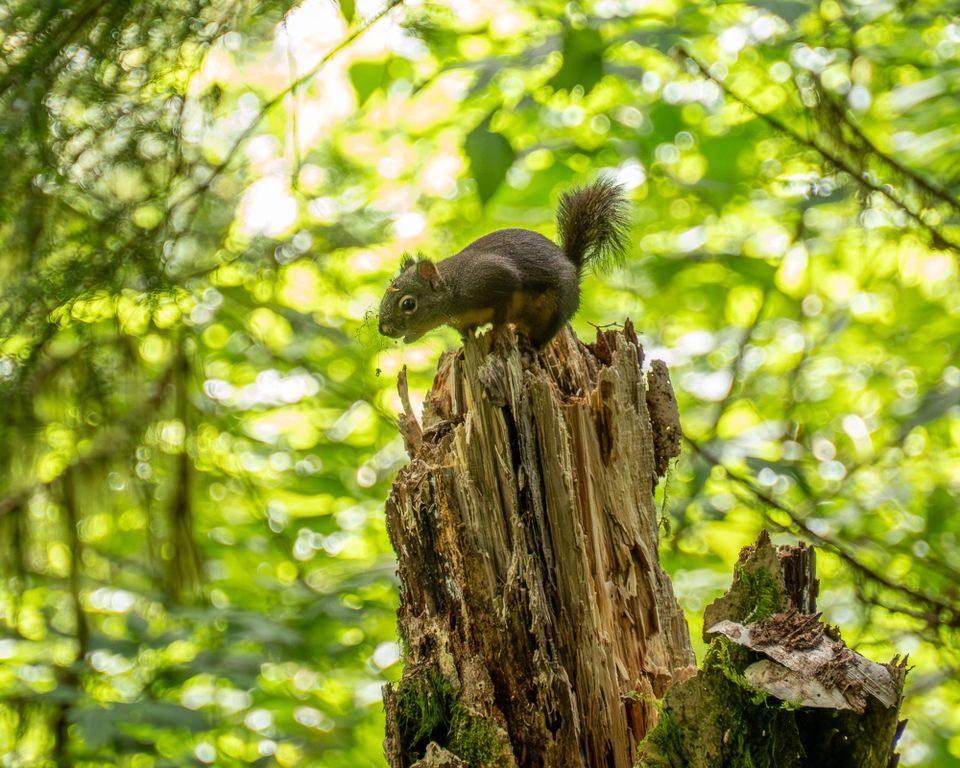
Photo credit: https://www.flickr.com/photos/apmckinlay/55301857945/
EcoFriendly West informs and encourages initiatives that support Western Canada’s natural environment through its online publication and the Nature Companion website/app. Like us on Facebook, follow us on BlueSky, X, and Mastodon, or subscribe by email.
Member discussion