EcoWest News, May 12, 2026
Welcome to EcoWest News, a weekly round-up of news and resources that you can put to use in addressing environmental issues and protecting the wild in your community.
Biodiversity
Unable to return to the wild, a great horned owl has found another role in life. For the past 27 years, she has fostered over 500 baby owls at a raptor rehabilitation centre in Delta, BC, helping to ensure they maintain a healthy distrust of humans. [CBC]
A yellow-bellied marmot, which typically lives in southern Canada, has somehow found its way to the University of Northern British Columbia's campus in Prince George, marking the most northerly sighting of the species ever recorded. [CBC]
9 charts demonstrate how Canada’s protected and conserved areas contribute to the economy. [The Narwhal]
Energy
Experts say the federal government’s overhaul of project assessment processes represents “by far the worst evisceration of environmental law in Canadian history”. [The Energy Mix]
Emailed breakdowns of energy usage are helping Manitoba households to conserve energy and save money. [CBC]
Small-scale balcony solar systems are gaining in popularity in Germany and Belgium. As yet, there is no sign that plug-in solar kits will become available in Canada. “The systems are not widely permitted: small-scale generation requires approvals, while interconnection processes vary by province and are designed around grid stability rather than plug-and-play simplicity.” [The Energy Mix]
Creativity
Alberta Wilderness Association is inviting Albertans to participate in Creative Witness. Choose a natural area and visit it 4 times over a month, connecting with it more deeply through art, writing, photography, or movement. [Alberta Wilderness Association]
A Season of Crows by Larah Luna has won the 2026 CBC Short Story Prize. It considers themes such as migration, landscape, memory, and loss. You can read it here. [CBC]
Fish
The federal government is rethinking its commitment to banning open net salmon farming in coastal BC following intense lobbying by industry groups and salmon farming companies. Farmed Atlantic salmon aren’t native to the west coast and have been shown to transfer parasites and disease to juvenile wild salmon along their migratory routes. [The Tyee]
The cold, clean water of Morrison Creek near Courtenay, BC, is home to a unique species of lamprey that produces two different types of offspring – brown, freshwater brook lamprey and the silver Morrison Creek lamprey. [The Discourse]
Urban Planning
Planners can play a key role in reversing the catastrophic decline of freshwater wildlife by designing cities around water from the outset, with floodplains reconnected, buried streams brought back to the surface, and stormwater ponds managed as living wetlands … Housing, roads, parks and industry should be planned in harmony with the freshwater landscape.” [Environment Journal]
By giving residents the data and the agency to act, Hammarby Sjöstad is a reminder that we do not just need smarter buildings, we need smarter ways of living together if we want to build sustainable neighbourhoods. [Smithsonian Magazine]
Land Ark’s Watercolour community in Ontario is walkable and sustainable with homes that are net zero or net zero ready. [Green Energy Futures]
Soundscapes
Chicago’s Midwest Society for Acoustic Ecology explores the vital role of sound and listening in natural habitats and human societies through immersive soundwalks, educational workshops, and creative and scholarly projects. [Midwest Society for Acoustic Ecology]
Nature’s Wonders
There are roughly 8,000,000,000 grains of sand per cubic meter of beach, and roughly 700,000,000,000 cubic meters of beach on Earth. That’s 5 sextillion grains of sand, and every one of them is microscopically unique. Excellent macro photos. [Magnified Sand]
When oak trees are heavily attacked by caterpillars one year, they delay leaf growth by 3 days the next spring, leaving newly hatched caterpillars with nothing to eat. This small shift slashes insect survival and reduces leaf damage by more than half. [Science Daily]
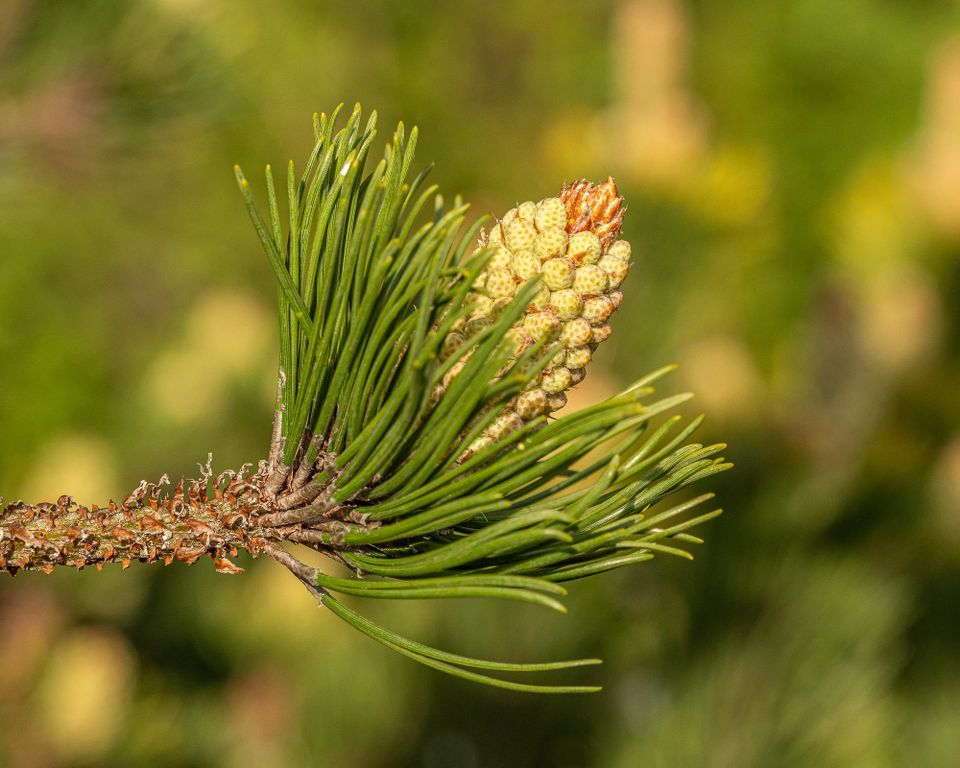
Photo credit: https://www.flickr.com/photos/apmckinlay/55247512060
EcoFriendly West informs and encourages initiatives that support Western Canada’s natural environment through its online publication and the Nature Companion website/app. Like us on Facebook, follow us on BlueSky, X, and Mastodon, or subscribe by email.
Member discussion