
EcoWest News, March 31, 2026
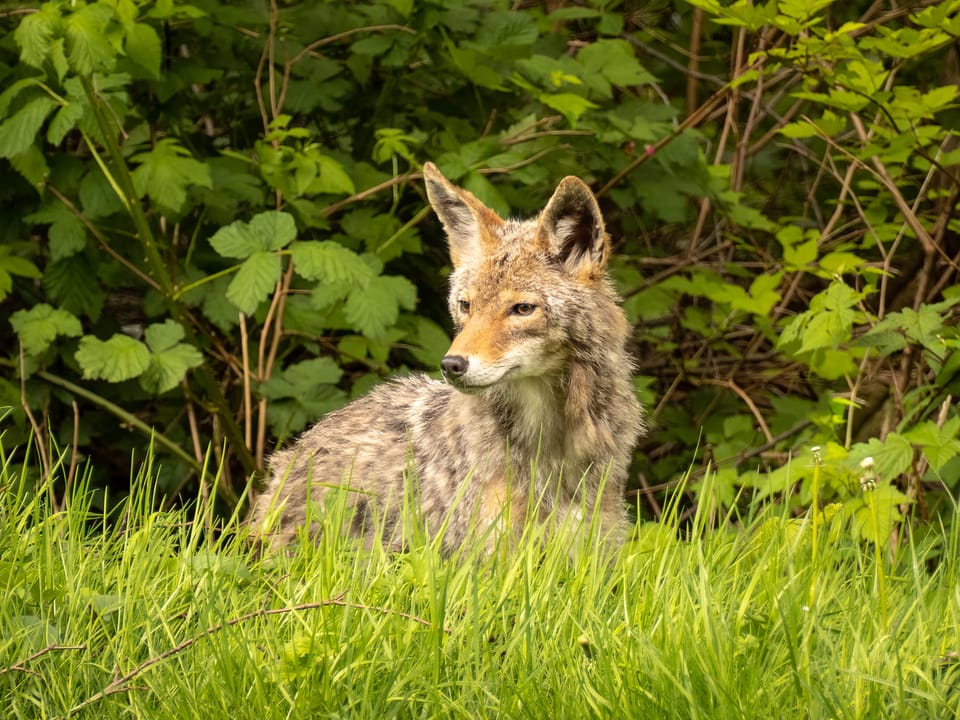
Welcome to EcoWest News, a weekly round-up of news and resources that you can put to use in addressing environmental issues and protecting the wild in your community.
Biodiversity
Establishing boundaries for a marine protected area based on polar bear habitat safeguards the resources the bears rely on to survive as well as the wildlife that scavenges their leftover kills. [EurekAlert!]
A high-resolution, binational map of ecological connectivity has been developed to guide conservation across the Canada/US border. It highlights key corridors and pinch points where movement is concentrated, particularly along mountain ranges and around major barriers such as the Great Lakes. [Conservation Corridor]
Choices
New Denver, BC, residents debate the benefits and drawbacks of a proposed large ski resort to their small, isolated community and to local wildlife. [Missoula Current]
Two US data centres are taking very different approaches to generating electricity. The one in Michigan will use renewable energy and ramp down power use during periods of high demand. The other will run on natural gas. [Inside Climate News]
There are nearly 14,000 km of aging asbestos water pipes running beneath Canadian communities. Health Canada’s report on ingesting asbestos in water excludes any evidence of harm, despite concerns raised by US and Italian researchers. [Watershed Sentinel]
Using recycled steel and copper from abandoned oil infrastructure to build wind turbines, solar panels, and the like could save nearly 2 billion metric tons of carbon emissions through 2050. [Anthropocene]
Fishing gear often traps unintended wildlife. Proven methods of avoiding this bycatch exist but haven’t yet been implemented. [Knowable]
Find Out More
A discussion on AI, cities, and equitable climate action provides insights from leaders across sectors to help municipalities navigate uncertainty, strengthen decision-making, and apply a climate and equity lens to AI-related choices. [Urban Climate Leadership]
Check out Watershed Moments: Critical conversations on Canada’s freshwater future, a series of 4 online webinars being offered in April 2026. [International Institute for Sustainable Development]
Why are some climate action projects successful while others struggle? A review of 12 UK success stories indicates success is possible everywhere, success factors can be copied, and it pays to focus on existing local skills and experience. [The Earthbound Report]
Speaking Out
First Nations, farmers, and local residents are calling for an environmental review of a proposed pipeline that would be part of a carbon capture project designed to rebrand oilsands oil as “low carbon”. 10 out of 13 other carbon capture projects have failed to meet their targets. [The Tyee]
Making a Difference
Green Kids Inc., founded 35 years ago, is rebranding as Wild Roots Theatre to reflect the fact that their plays and workshops are designed to support people of all ages on their climate journeys. [Wild Roots Theatre]
Two First Nations women are supporting and mentoring First Nations communities who are monitoring the aquatic habitat in often-overlooked small streams and tributaries of the Upper Fraser. [Watershed Security Fund]
Replacing hard tennis courts with green clay courts is an opportunity to reduce emissions as they absorb large amounts of carbon dioxide. [Anthropocene]
Researcher Jennifer Grenz “hopes her research can bring Indigenous ways of knowing and stewardship to the forefront of a field [land stewardship] typically dominated by western science.” [The Discourse]
Nature’s Wonders
The study of a sperm whale birth reveals complex communication and coordinated care from two separate kindship groups to help the newborn to survive. [Inside Climate News]
Snow flies remain active at minus 6 degrees Celsius, counteracting sub-zero temperatures by creating bursts of body heat and producing antifreeze proteins. [Science Daily]
Marmots are social animals. After being released, one Vancouver Island marmot hiked back to the breeding facility to hang out with the other young marmots. [CBC]
Photo credit: https://www.flickr.com/photos/apmckinlay/52106051551
EcoFriendly West informs and encourages initiatives that support Western Canada’s natural environment through its online publication and the Nature Companion website/app. Like us on Facebook, follow us on BlueSky, X, and Mastodon, or subscribe by email.
Member discussion