
EcoWest News, March 24, 2026
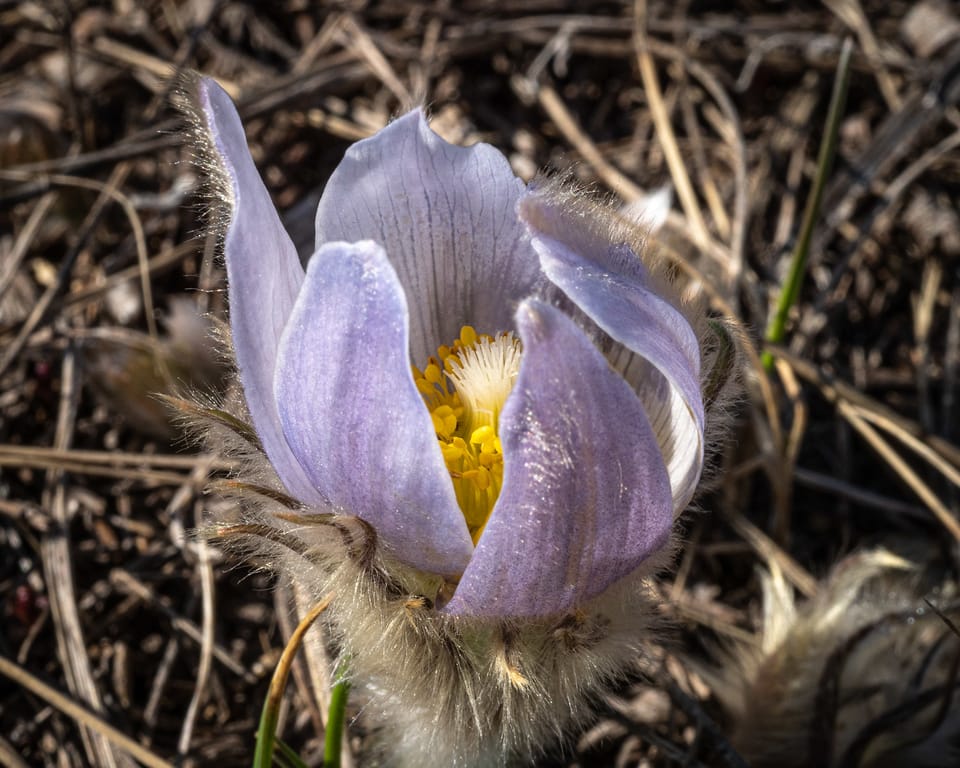
Welcome to EcoWest News, a weekly round-up of news and resources that you can put to use in addressing environmental issues and protecting the wild in your community.
Biodiversity
Purple martins rely on humans to provide nest boxes – and preferably close (9-30 metres) to human housing. [bioGraphic]
There were several sightings of endangered Cooper’s Rocky Mountainsnails found nowhere else in Canada and the first observation of Spring Coralroot in Canada during a 2025 bioblitz on the Alberta side of Cypress Hills Interprovincial Park. [Alberta Wilderness Association]
Fake news isn’t a new phenomenon, and it isn’t limited to humans. It’s also been observed in both birds and bacteria. [phys.org]
The 20 Arctic polar bear populations are each responding differently to climate change. [Polar Bears International]
Environmental Assessments
Established as a mining boom town in the 1890s, Rossland, BC, is now home to a $40-million tourism industry, and locals are pushing back against a proposed open-pit mine just 7 km from downtown with calls for an environmental assessment. [The Tyee]
The draft Co-operation Agreement between Alberta and Canada on Environmental and Impact Assessment is designed to increase efficiency, but a lack of stringency in the regulatory review of large infrastructure projects “could pose significant threats to land, water, and wildlife”. [CPAWS Northern Alberta]
The public has until April 13 to comment on the BC government’s plans to fast-track the environmental assessment process for major projects, including mines. [The Tyee]
Water
Artificial turf sports fields leach chemicals deadly to fish into streams and rivers. Alternative turf materials or a treatment system that captures contaminants would help mitigate the problem. [CBC]
Energy
Interprovincial transmission capacity is very low in Alberta. Expanding connections between grids will make provincial and territorial electricity systems more resilient, more efficient, and lower cost. [Pembina Institute]
Replacing aging turbines on existing wind farms with newer, more powerful and efficient models could double the amount of electricity produced by onshore wind energy in the US – without increasing its footprint. [Anthropocene]
Making a Difference
Three First Nations will now manage 52,000 hectares of Clayoquot Sound forest. The First Nations plan to practise smaller-scale forestry, centred on biodiversity, carbon storage, and local opportunities. Activities could include restoration work and ecotourism. [CBC]
Researchers in the European Union are deploying drones and robots to remove litter from the sea floor. [EuroNews]
Reducing aviation contrails is one of the cheapest ways to limit global warming. A trial demonstrated “flights that followed an avoidance path cut contrails by almost two-thirds”, but further effort is required to assist dispatchers and pilots in implementing these changes. [By the Numbers]
Seven healthy caribou calves were born at Jasper National Park’s newly constructed Caribou Conservation Breeding Centre. [Bow Valley Insider]
Have Your Say
Alberta residents have until June 5 to provide input on the future of the Ghost-Kananaskis area in terms of recreation, employment, and conservation. Chloe Hahn, conservation coordinator for the CPAWS – Southern Alberta, stresses the need for landscape-level planning and assessment of cumulative effects. [Calgary Herald]
Books & Webinars
The Climate Fiction prize celebrates novels that engage with the climate crisis through imaginative storytelling. There are 6 books on the 2026 shortlist. [Climate Fiction Prize]
An upcoming series of webinars on grasslands includes sessions on Rethinking Urban Grasslands (April 1) and Pollinators, Plants & People (April 22). [Canadian Wildlife Federation]
Nature’s Wonders
“Insects – many of which have wings smaller than a human fingernail – are among the planet’s most prolific migrants, with trillions travelling large distances every year, including over deserts, mountain ranges and even crossing oceans.” [The Guardian]
Photo credit: https://www.flickr.com/photos/apmckinlay/49821962203
EcoFriendly West informs and encourages initiatives that support Western Canada’s natural environment through its online publication and the Nature Companion website/app. Like us on Facebook, follow us on BlueSky, X, and Mastodon, or subscribe by email.
Member discussion