
EcoWest News, March 10, 2026
Welcome to EcoWest News, a weekly round-up of news and resources that you can put to use in addressing environmental issues and protecting the wild in your community.
Biodiversity
The Rainbow, Frisby, and Jordan valleys north of Revelstoke host “ancient forests so luxuriant they seemed to be from primeval times. Grove after grove of enormous red cedar trees stretched unbroken for kilometres. Seas of feathery ferns lapped at their waists. Supersized skunk cabbage leaves brushed their chests and thickets of spiky devil’s club towered over their heads.” “There’s no reason on earth we should go in and log.” [The Narwhal]
Spiders are invaluable for controlling insect populations and a vital food source for birds, lizards, and other predators. “We need to appreciate them for their ecological importance, and that begins with collecting more data and considering them worthy of conservation.” [EuroNews Green]
BC’s Garry oak ecosystems lack protection. A patch of rare slimleaf onions was dug up because there was no requirement for an environmental survey. It’s just one of six projects in the Nanaimo area impacting this endangered ecosystem. [The Narwhal]
Treading Lightly on the Land
Woodland Cree First Nation (WCFN) in northern Alberta is challenging three Water Act approvals granted to Aurora Peat Products ULC for large-scale peat mining (900 hectares) in their traditional territory. Draining and clearing these wetlands would remove a natural wildfire barrier. [Ecojustice]
Reporting on agricultural conservation and restoration projects, a farmer and conservation enthusiast says, “Local farm and community efforts, guided by solid planning and farmer buy-in, can strengthen the environment, economy and social fabric of rural regions for the long haul.” [The Western Producer]
Infrastructure
10 provinces and territories have agreed to identify and speed up new interprovincial and territorial transmission infrastructure and expand electricity trade within Canada. [The Energy Mix]
The Vital Connections: Linear Critical Infrastructure and Climate Risk in BC report “highlights four systemic challenges: gaps in how risks are measured; poor coordination across systems; limited access to data; and finite public and political support to climate-ready the province’s systems”. [Pacific Institute for Climate Solutions]
Asking Difficult Questions
£100 million to protect 300 bats: what if the money had been used to restore 4,500 hectares of woodland or to fund several cheaper bat habitat restoration projects? “It can be tempting to resist anything that looks like the ‘watering down’ of environmental protections. But what if the protections themselves are part of the problem? If you really care about defending nature, you should care about what works.” [The Guardian]
Five questions to ask to assess the sustainability of clothing or textiles: What’s being highlighted and what is being left out? Where does the advertised claim come from? Are scientific terms being used precisely or suggestively? What design choices shape end-of-life? What isn’t visible on the label? [The Conversation]
Parenting
“I’ve been doing my best to raise an environmentally aware city kid without directly talking about the climate crisis until it felt age-appropriate to do so, but with her bringing it up ― now was the time.” [The Nature of Cities]
Life isn’t easy for female northern killer whales. Pregnancy lasts 1½ years. They nurse newborns for 2 years and then hunt and share food with their adult children who never leave. It’s the lifelong care that has a toll on the mothers. [CBC]
DIY
Light pollution is the easiest form of pollution to do something about. Even small changes (using downward-facing lights, dimmers, motion sensors, warmer LEDs) can dramatically reduce urban glow. [Atmos]
Nature’s Wonders
Long toes, lobed feet, sticky soles, and rotating toes help wetland birds adapt to their watery environment. [Birds Canada]
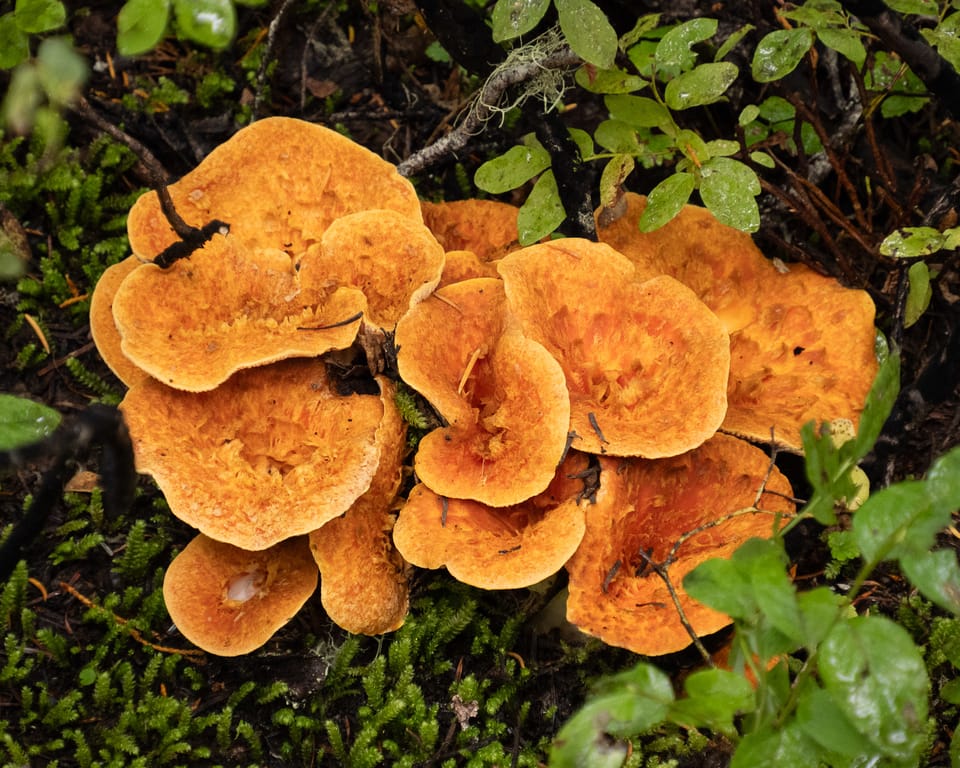
Photo credit: https://www.flickr.com/photos/apmckinlay/54051473768
EcoFriendly West informs and encourages initiatives that support Western Canada’s natural environment through its online publication and the Nature Companion website/app. Like us on Facebook, follow us on BlueSky, X, and Mastodon, or subscribe by email.
Member discussion