
EcoWest News, January 20, 2026
Welcome to EcoWest News, a weekly round-up of news and resources that you can put to use in addressing environmental issues and protecting the wild in your community.
Biodiversity
The Macropis cuckoo bee, one of North America’s rarest bees, has been documented in Elk Island National Park. The bee is exceptionally specialized. It lays its eggs in the nests of Macropis bees that collect oil not nectar from only one plant, yellow loosestrife. Yellow loosestrife grows in moist forested areas, while Macropis bees nest in sandy soil. All of these elements must be in place for the cuckoo bee to thrive. “Species like the Macropis cuckoo bee act as indicators of ecosystem health. If a landscape can support a native oil-producing plant, a specialist bee that relies on it, and a parasite that depends on that bee, all in close proximity, it suggests that the habitat is intact and functioning.” [Alberta Native Bee Council]
Saskatoon Natural Grasslands was established to protect the Plains Rough Fescue growing there. It doesn’t grow there anymore, highlighting the failure of urban conservation efforts to establish measurements for success or failure. “If the Grasslands had the rights of a person, standards of intervention and rejuvenation could be explicit and there would be legal recourse. Lacking this protection, species loss in the Grasslands is made invisible, and acknowledging the permanent loss of prairie for future generations is extinguished too.” [The Metropole]
City Life
In dry regions, grassy areas can have a net warming effect. Planting hardy trees is a better option as they provide shade and their long roots can tap moisture deeper underground, allowing them to dispense large volumes of water, even during hot spells that dry out topsoil. [Yale Environment 360]
Energy
The court has dismissed an appeal challenging the Saskatchewan government’s plans to extend the life of coal-fired power plants, saying the claimants hadn’t established a legal basis for the review. The claimants’ lawyer says, “Citizens are demanding reasons for the Coal Decision that are justified, transparent, and intelligible … We believe that a near billion-dollar administrative decision to double down on the most polluting form of energy generation—a decision which, we believe, violates the rule of law—is something that the courts can and should review.” [The Energy Mix]
Saskatchewan plans to establish a centre for safety, licensing and testing on small modular nuclear reactors in Regina. [CBC]
Shell and Mitsubishi are trying to withdraw from an LNG Canada megaproject in BC, reinforcing predictions that 2026 will be the year an LNG multi-year supply glut hits the global market. [The Energy Mix]
Germany has 847 energy co-ops; the Netherlands has 713. Canada has 82. Central electricity generation and distribution worked well in the past, but community energy co-ops could play an important role in a more distributed system that is resilient under climate change. [The Narwhal]
Problem-Solving
Existing aircraft, flown differently, could deliver dramatic emissions cuts without grounding travellers by: flying the most efficient aircraft; switching to all-economy seating (business and first-class seats are up to 5 times more carbon intense); and maximizing the number of passengers (current average is 79%). [Anthropocene]
Dark Sky International unveiled a car designed for darkness at the Detroit Auto Show. The concept car’s lighting reduces excessive brightness and glare while supporting optimized light distribution. Its matte exterior finish and surface geometry are designed to minimize glare and reflections. [Dark Sky]
China is turning rainwater into an asset. Buildings are being designed to collect rainwater, which is then stored and treated for use in a parallel “grey” water system to keep the recycled fluids separate from purified drinking water. [The Guardian]
Cost is the biggest barrier to purchasing an electric vehicle. Opening up Canada’s market to lower-priced Chinese EVs will help. [Pembina Institute]
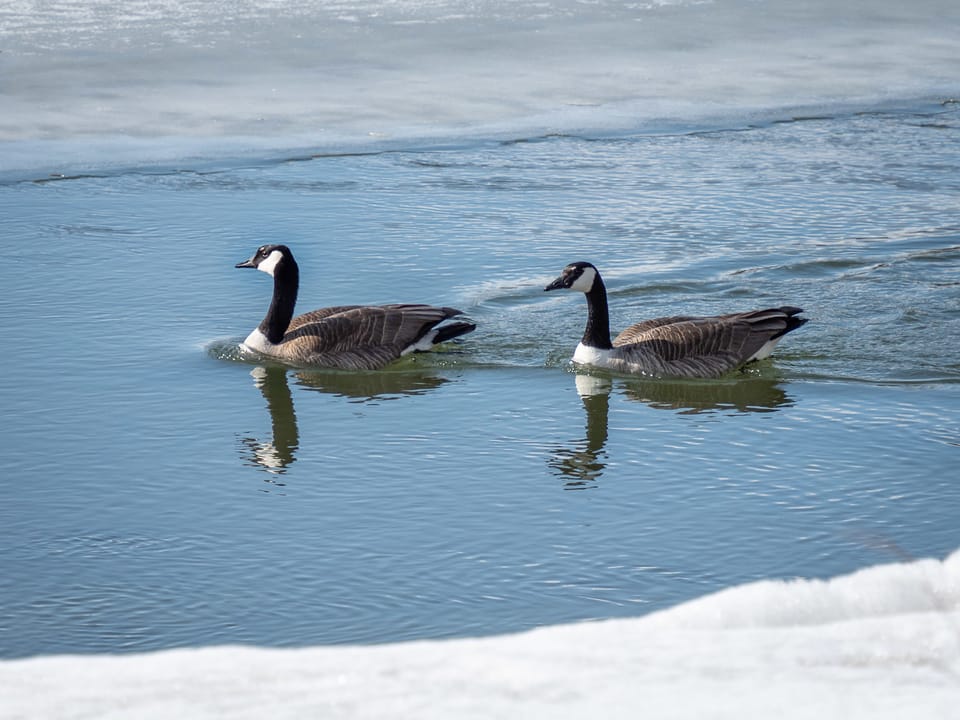
Photo credit: https://www.flickr.com/photos/apmckinlay/51082756616
EcoFriendly West informs and encourages initiatives that support Western Canada’s natural environment through its online publication and the Nature Companion website/app. Like us on Facebook, follow us on BlueSky, X, and Mastodon, or subscribe by email.
Member discussion