
EcoWest News, February 10, 2026
Welcome to EcoWest News, a weekly round-up of news and resources that you can put to use in addressing environmental issues and protecting the wild in your community.
Biodiversity
Forests around the world are undergoing a major shift, becoming more uniform, losing biodiversity, and growing less resilient. Protecting slow-growing tree species is increasingly urgent. [Science Daily]
Agriculture
University of Calgary researchers have assembled a dataset of beneficial insects and spiders living near Alberta farm fields. Many beneficial insects that help regulate pests require natural habitat, colonizing farm fields only during the growing season. Small pockets of non-crop habitat help support beneficial insects without increasing pest problems. [The Western Producer]
I plant prairie, says Bob Narem, who has spent the last 5 years restoring 100 acres of cropland to grassland. Over 100 different plant species have taken root on his reconstructed prairie. [The Dickinson Press]
Coal
A group of environmentalists has filed an appeal after losing a legal case challenging the continued use of coal plants in Saskatchewan beyond a federal deadline. [CBC]
Four metallurgical coal mines in BC’s Elk Valley have polluted local waterways. The mining company now wants to extend operations and expand into a new area. “We’re starting to make things better for once, and now they want another mine which will actively set everything back,” says Simon Wiebe, Wildsight. [CBC]
Food
Climate instability is reducing cacao supplies and prices are rising. Manufacturers have responded by producing chocolate-flavoured products as opposed to chocolate. “Chocolate has always reflected global forces, from colonial trade routes to modern commodity markets. What is different now is how directly climate change is shaping what ends up in our food, and how quietly those changes are being normalized.” [Sierra Club]
Taking Action
EcoJustice celebrated two legal victories in January, one protecting wild salmon in BC and the other defending Canada’s ability to curb plastic pollution. They are now taking the federal government to court over delays in protecting the habitat of southern mountain caribou.
Victoria city council wants the province to allow local governments to regulate greenhouse-gas emissions from existing buildings. “53% of the city’s total emissions come from existing buildings … if cities hope to meet their climate targets, they need to be able to take action.” [Times Colonist]
Manitoba and Canada will study the feasibility of a national marine conservation area along Manitoba’s Hudson Bay coast. Establishing a conservation area would create regulations to ensure responsible guardianship of the area, of particular importance as consideration is given to commercial development in the area. [CBC]
Parks Canada is considering vehicle traffic/parking limitations and reservations/permits to avoid exceeding environmental and facility capacity in certain tourism hotspots such as Lake Louise and Paradise Valley. [Town and Country]
Making a Difference
Wildlife overpasses and underpasses are expensive, but they pay for themselves by reducing collisions by 80-97%. [Big Sky Journal]
On the Bookshelf
The 2026 Climate Fiction prize longlist spans thrillers, experimental literary works, folklore and reimagined myths, science fiction, and a generational family saga. [Climate Fiction Prize]
Through the Lens
A modern approach to 19th-century photography techniques creates mesmerizing photographs of starling murmurations. [bioGraphic]
Coral, fungi and butterflies: check out the winners of the close up photographer contest. [DP Review]
Nature’s Wonders
American badgers, under threat from vehicle traffic and habitat loss, provide accommodation in their burrows for 31 different species. [CBC]
Rattlesnakes are helping to green the desert by dispersing seeds in their excrement that germinate at a higher rate thanks to the added fertilizer. [Sierra Club]
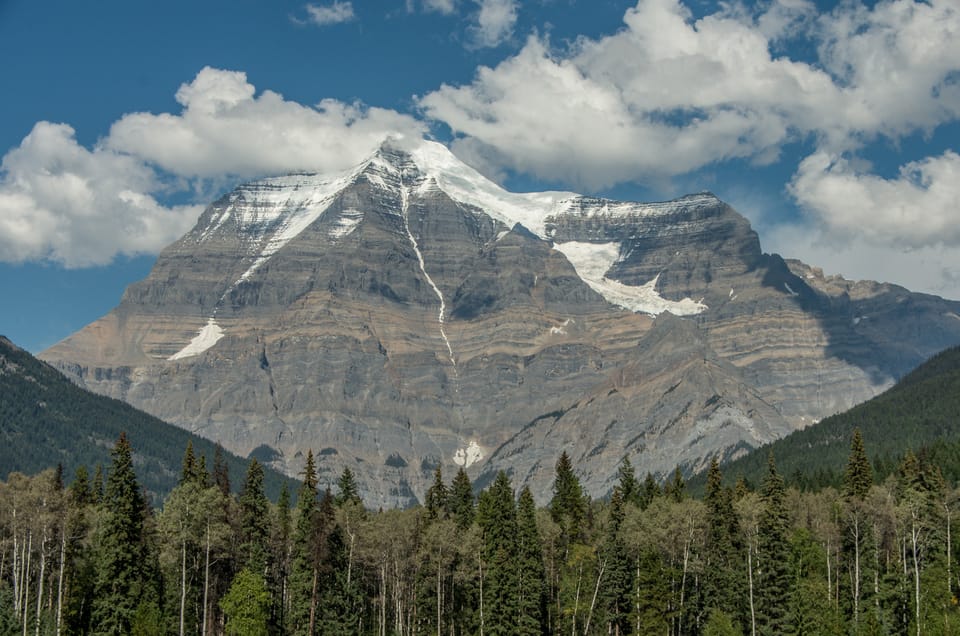
Photo credit: https://www.flickr.com/photos/apmckinlay/9735947567
EcoFriendly West informs and encourages initiatives that support Western Canada’s natural environment through its online publication and the Nature Companion website/app. Like us on Facebook, follow us on BlueSky, X, and Mastodon, or subscribe by email.
Member discussion