
EcoWest News, December 16, 2025
Welcome to EcoWest News, a weekly round-up of news and resources that you can put to use in addressing environmental issues and protecting the wild in your community.
Across the West
Environmentalists hope to protect a large area south of La Ronge from peat harvesting, which would require building roads, staging areas, and a drainage network. [CBC]
The Saskatchewan Environmental Society is concerned that the City of Saskatoon’s Turf Remediation Program recommends the use of herbicides on public parks and sports fields and fails to acknowledge the risks to human health and the environment. [Saskatchewan Environmental Society, SES Letter to City of Saskatoon on Proposed Herbicide Use in Public Parks]
The Alberta government is proposing the establishment of 3 all-season resorts on current parkland. There’s a need for strong safeguards to ensure the nature people come to enjoy is protected into the future. [CPAWS-NAB]
Senior Alberta government officials stalled the submission of a coal mine pollution study to a scientific journal and prevented the lead researcher from speaking publicly about his work. [The Narwhal]
Manitoba Hydro plans to use new gas turbines, wind farms, hydroelectric improvements, a battery storage pilot project, and energy-saving measures (to lower peak demand) to increase the province’s generating capacity. [CBC]
The Sio Silica sand mine southeast of Winnipeg has been proposed, rejected, and then resubmitted. Ten years later, there’s still no decision. [The Narwhal]
Switching all BC homes to heat pumps would save households $675 million a year while reducing grid demand and emissions but would require a provincial plan to support the appropriate construction practices and the removal of cost barriers for low- and middle-income households. [Clean Energy Canada]
Industries such as smelters, fracking companies, and water bottlers pay much less for water in BC than in other provinces. Raising the rates would generate revenue to fund watershed restoration projects. [The Tyee]
Across Canada
Ontario provincial parks, such as Sleeping Giant Provincial Park near Thunder Bay, are retrofitting their windows to avoid bird collisions. [FLAP]
Health workers are weighing climate risks, such as higher rates of cancer and respiratory illnesses, alongside compensation and infrastructure when deciding where to live and work. [The Narwhal]
Around the World
A growing number of countries are showing that it is possible to achieve growth while also cutting emissions. [Yale Environment 360]
From rocket launch to re-entry, satellites are adding CO2 and other pollutants to every layer of Earth’s atmosphere. And there are a lot of satellites heading up into space, especially when you consider their 5-year life span. [Undark]
Air passengers are exposed to ultrafine particle pollution, especially during boarding and taxiing. Residents in communities surrounding airports are also affected. [The Guardian]
Living With Water
BC’s Fraser Valley is flooding again with some lessons learned and others ignored after the major flooding in 2021. [The Tyee]
For flood-prone Hamilton, Virginia, learning to live with water means guiding water to areas where it can flow and sit safely and restoring natural systems that will absorb and cleanse it. [Inside Climate News]
Biodiversity
Researchers have detected changes in the DNA of southern Greenland’s polar bears that could help them adapt to warmer climates. The results offer some hope for polar bears’ survival but also indicate the impact climate change is having on wildlife. [The Guardian]
Nature’s Wonders
Dolphins help killer whales hunt for salmon by diving deep to chase the salmon. The whales are listening and head in for the kill when the dolphins locate a large salmon. Everyone benefits as the dolphins, who couldn’t catch salmon on their own, can feast on the scraps from the whales’ meal. [CBC]
Living creatures come in all shapes and sizes from DNA and hemoglobin to blue whales and tyrannosaurus rex – an illustrated panorama. [Size of Life]
EcoFriendly West is taking a short break over the holidays. EcoWest News will be back online on January 6, 2026.
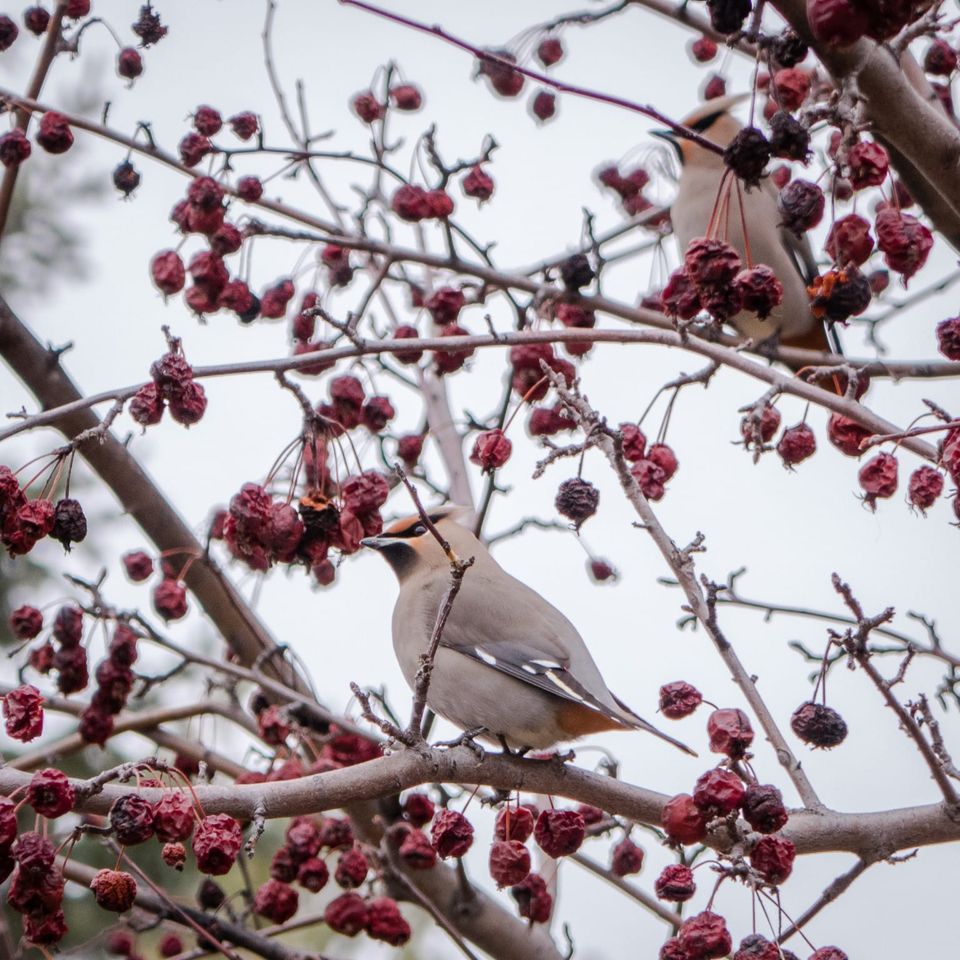
Photo credit: https://www.flickr.com/photos/apmckinlay/26444076526
EcoFriendly West informs and encourages initiatives that support Western Canada’s natural environment through its online publication and the Nature Companion website/app. Like us on Facebook, follow us on BlueSky, X, and Mastodon, or subscribe by email.
Member discussion