
Book Review: The Genius of Trees: How They Mastered the Elements and Shaped the World by Harriet Rix
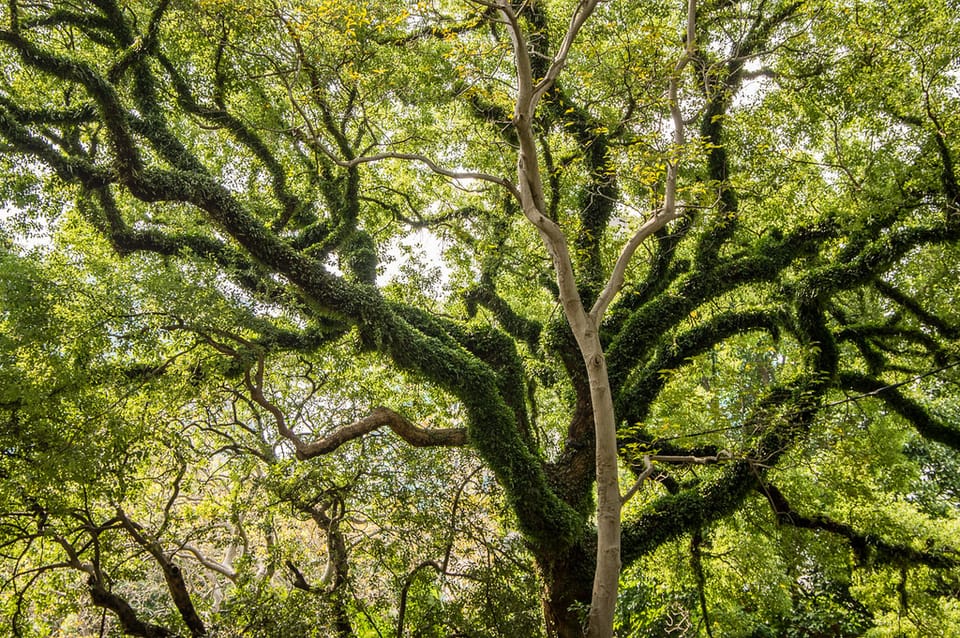
“Humans have a tendency to underestimate trees: to assume that if we plant one it will grow, that if we cut one down we can simply plant another. Because trees don’t move it is easy to forget that chemically they can run rings around us while we sleep, that they are moving the earth under our feet and shifting the colors of the sky over our head, not just by shading out the sun, but by taking out carbon dioxide and releasing oxygen.”
Trees blend into the background, and we don’t pay them a great deal of attention. Harriet Rix believes that’s a mistake and her book, The Genius of Trees: How They Mastered the Elements and Shaped the World, points out the ways in which trees have shaped and continue to shape the world. Individual chapters look at trees’ influence on land, water, air, fire, fungi, plants, and animals, including humans.
Shaping Water
“When modern humans evolved about 40,000 years ago, there were an estimated 6 trillion trees on the planet. By the time we appeared on the scene, trees had already altered the planet’s air, changed the flow of water, used fire as a tool, and built relationships with the plants and animals around them.”
The giant clubmosses and tree ferns of the Devonian period played a significant role in shaping the land and the climate. Rivers appeared as the trees’ roots stabilized the flood plains, while log jams shaped the flow of the water, just as beaver dams do today. The trees acted as shelter belts, calming strong winds blowing in from the ocean and moving moisture further inland. “Rain that fell on these coastal forests reevaporated and fell again as rain further inland, reducing the dry desert area of the vast continents and allowing trees to penetrate further into the interior.”
Trees continue to cycle water inland. Rix points to a Brazilian experiment showing that deforestation of just 1% along the coast would reduce rainfall 125 miles inland by .01 inches per month.
Shaping Soil
“Give a tree a lump of rock and some time, and it will make its own habitat. Trees will break rock, digest it to extract phosphorus and other minerals, gradually beat in carbon and nitrogen from the air, enervate and stabilize the resultant soil, and mold themselves a home of deep-rooted stability.”
To dig deeper into the soil and extract the minerals the tree needs to grow, the fine roots exert a pressure five times greater than that of a horse standing on your toe. The pressure destroys the cells at the tip of the root so they are constantly being renewed. The roots also secrete slime to lubricate their passage through the soil. The slime helps rock particles to clump together, trapping water and preventing the soil from drying out.
Shaping Fungi
“Although some fungi will kill trees and some not harm them at all, most sit at an awkward interface, a balancing point between support and harm, where the forest network can turn on a coin and the fungal support network quickly change into the digestion matrix. Trees use fungi for their own advantage, but they sometimes lose.”
Trees benefit from fungal partnerships, but they must make careful choices, only feeding those they believe won’t harm them. Trees in the southern and northern hemispheres make very different choices. Trees in the tropics normally have access to plenty of water and light. They can easily extract nitrogen from the soil as bacteria and fungi break down plant material quickly in the hot, wet climate. There is, however, a great deal of competition from other trees for phosphorus. Trees need the phosphorus to grow and reproduce quickly, so they accept fungal partners that will provide the phosphorus the trees need to succeed. Trees in northern and Mediterranean climates grow more slowly so they’re less interested in rapid growth and more interested in partnering with fungi that are efficient rotters.
Shaping Animals
“The Brazil nut tree … has gradually inflated the strength of bees in its area of the forest, supporting only the huge black euglossine bees that can force their way inside its flowers. As a result of their size the bees can travel long distances between the huge and widely spaced trees.”
Because trees are immobile, they need help transporting their pollen and seeds to other locations. While Brazil nut trees rely on bees, banana trees count on bats to help them out. The trees control the bats by ensuring the fruit don’t sweeten until they’re ripe. The yellow colour with brown spots may help to camouflage the fruit so they aren’t eaten by monkeys who don’t spread the seed. The colouration has the opposite effect on bats: ”Under UV light the brown spots (caused by chlorophyll breaking down) fluoresce, and the banana strobes like a cartoon cow.”
Human beings have also been shaped by trees as we originally lived in the forest canopy. “Binocular vision, with both our eyes pointing forward, allows us to judge distances and see and map a way through the canopy. Standing upright you can reach a branch high above your head and grip it with strong and flexible hands that have the perfect adaptation to smooth bark. Fingers backed by hard nails have fat and fluid-filled pads surrounded by a stiffer lining, allowing them to deform like a slightly deflated tire to the shape of the branch and maximize surface area and resultant friction. Fingerprints, which we share via convergent evolution with the otherwise very distantly related koalas, channel away a film of water that might cover a branch and interlock with rougher bark.”
The Genius of Trees
Harriet Rix points out “we share one world with trees and one need for survival.” We underestimate trees at our peril.
See Also
Pollination & Seed Dispersal of Trees & Shrubs [EcoFriendly West]
They Grow Where No Other Tree Can – Canada’s Limber and Whitebark Pines [EcoFriendly West]
Photo credit: https://www.flickr.com/photos/apmckinlay/15228483980
EcoFriendly West informs and encourages initiatives that support Western Canada’s natural environment through its online publication and the Nature Companion website/app. Like us on Facebook, follow us on BlueSky, X, and Mastodon, or subscribe by email.
Member discussion